 en
en  Italian
 French
 German
 Spanish
 Portuguese

- 25/02/2026
- Companies: strategies and future
Index
Since 1998 Mixal has been producing aluminum profiles and systems for the furniture sector. Innovation, quality and attention to detail are the company's defining elements which, grazie a un know-how altamente specializzato, riesce a soddisfare le esigenze dei clienti con una produzione industrializzata ma al tempo stesso with artisanal care.
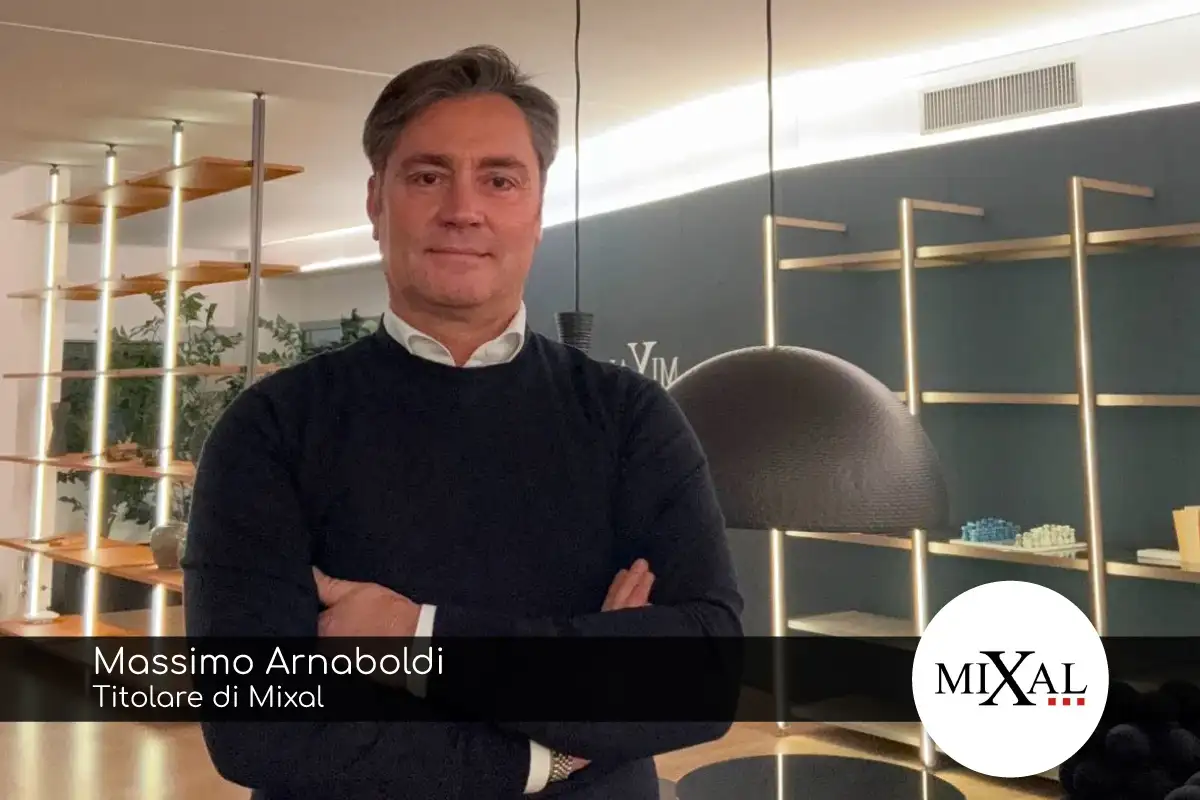
Innovation, sustainability, customization, mindful and responsible design are some of the topics discussed by Massimo Arnaboldi, owner of Mixal, in this interview; he also suggests possible business strategies to adopt to face the current ever-changing economic scenario.
Materials, increasingly sustainable, intelligent and high-performing, have become a central theme in design. How are your innovation strategies expressed?
For Mixal innovation is a cultural process before it is technological. We work with aluminum as a material capable of interpreting the new needs of contemporary design: sustainability, lightness, durability and expressive freedom. Our strategy is based on the continuous experimentation with solutions that improve technical performance without sacrificing formal quality. We develop systems that are increasingly efficient and sustainable, optimizing production processes and finishes, with the goal of offering designers tools that can integrate perfectly with the language of architecture and design. For us, innovation is making technology invisible, leaving room for the purity of the design line.
Components, although hidden elements, now play a fundamental role in a project both aesthetically and functionally. What are your new products that best express these characteristics?
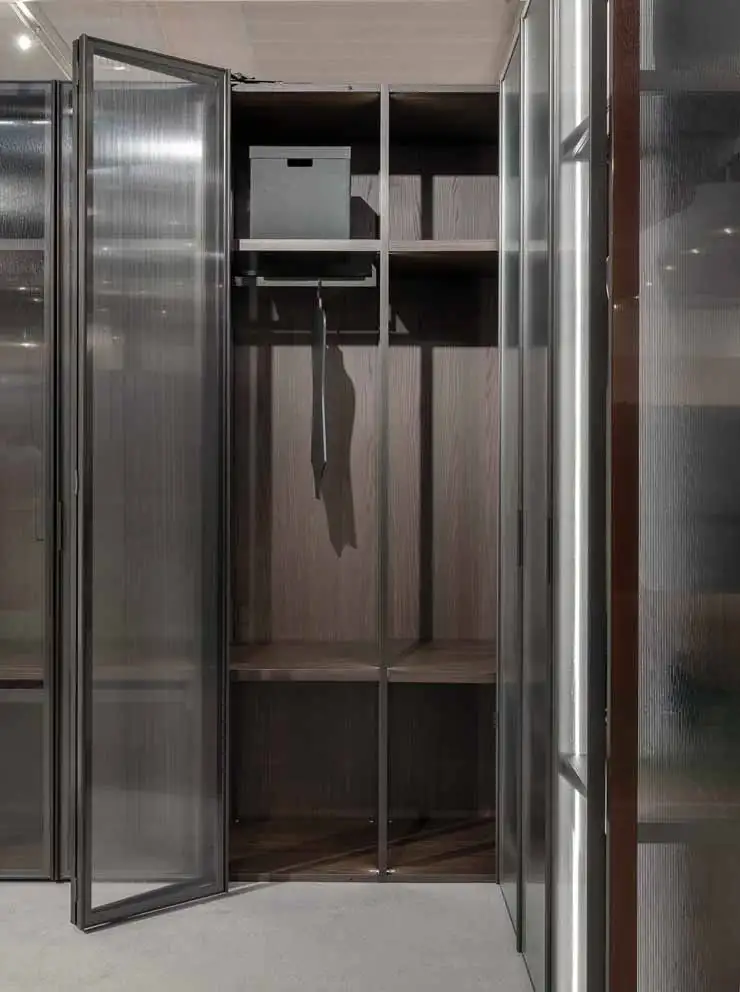
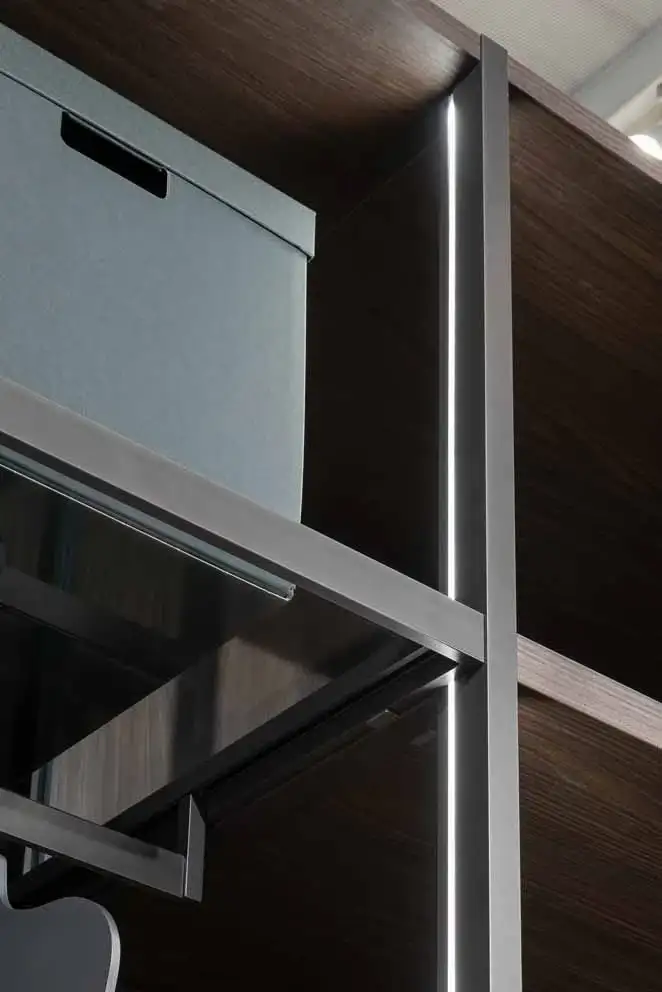
Mixal components are born to be discreet but decisive. New aluminum profiles and systems designed with particular attention to proportions, the rigor of sections and the continuity of surfaces — fundamental elements for an essential and contemporary design.
From a functional point of view, they guarantee high performance in terms of stability, precision and durability; from an aesthetic point of view, they make it possible to achieve visually light, minimal solutions that are coherent with the architectural project.
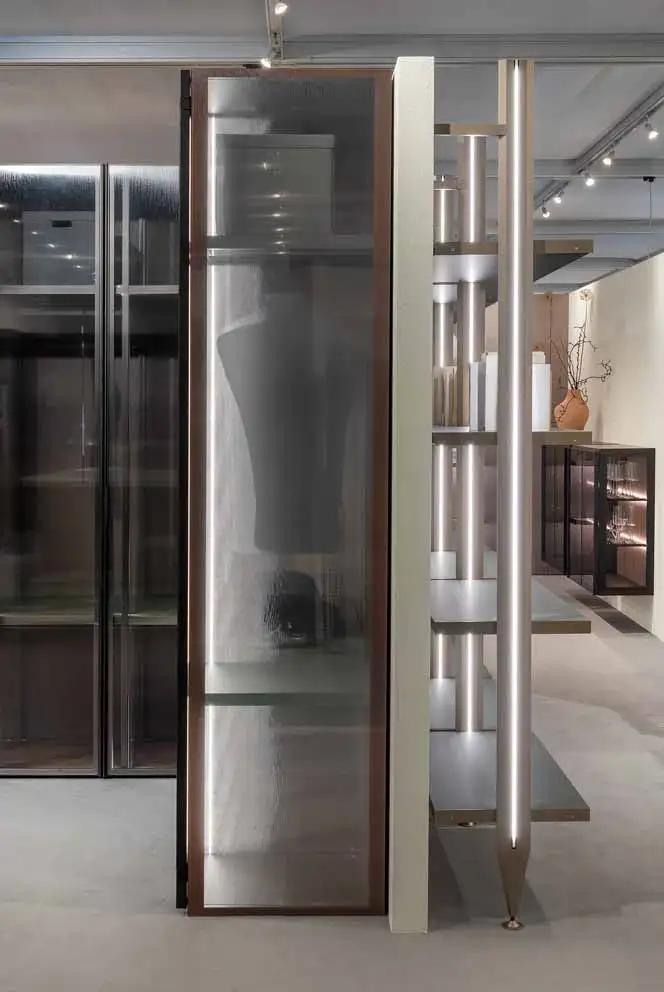
Among the new products presented at the latest Sicam 2025 we highlight X-WALL, an innovative modular system that transforms the wall into a living, functional surface. Horizontal and vertical profiles define the space, accommodating shelves, storage units and integrated lighting systems.
Responsible innovation is increasingly expressed through the use of recycled and recyclable materials or through green technologies and production processes capable of reducing environmental impact. How does your company respond to this now-priority theme in corporate strategies?
Responsible innovation is a principle that guides Mixal's entire industrial process. Aluminum represents a concrete answer to this vision: it is a material that is 100% recyclable, potentially infinite in its life cycle, and allows for a significant reduction in resource consumption over the long term. The company constantly invests in optimizing production processes, focusing on energy efficiency and waste reduction. Sustainability and innovation become structural elements.
How much can the new European Ecodesign regulatory framework influence sustainable design processes?
The new European Ecodesign regulatory framework represents a fundamental step towards more mindful and responsible design. For Mixal, these guidelines are an opportunity to strengthen an approach already oriented towards quality and sustainability.
Ecodesign pushes designers to rethink products from the earliest development phases, considering the entire life cycle: from material selection to production, from use to disposal. This approach favors more efficient, modular and durable solutions, able to dialogue with the needs of contemporary architecture and with a growing attention to environmental impact. In this scenario, regulation becomes a virtuous stimulus that accelerates innovation and promotes a more mindful design culture where aesthetics, performance and environmental responsibility coexist in balance and are parts of a single narrative.
In an increasingly competitive market, customization is a strategic topic. Therefore a more proactive collaboration between company and clients allows for punctual responses to their needs; in particular in fast-growing sectors such as contract, hospitality or the marine sector. How does your company approach this topic?
For Mixal, this topic translates into an open and collaborative approach, where dialogue with designers, companies and clients becomes an integral part of the creative process: tailored design for excellence. The company addresses customization starting from listening: understanding the specific needs of different contexts such as contract, hospitality or the marine sector means interpreting technical constraints, aesthetic languages and required performance, transforming them into coherent and reliable solutions. The aluminum systems from Mixal are designed as flexible elements, capable of adapting depending on use and context. Personalization is therefore not a mere formal variation, but a tool to build quality, design continuity and long-term value.
Facing a continuously evolving scenario, how is your company preparing to respond? Will you focus on other markets, and if so which ones?
In an economic scenario in constant transformation, marked by geopolitical instability, environmental transitions and changes in production models, adaptability becomes a key factor. Mixal responds to this complexity by strengthening its industrial identity and investing in flexibility, innovation and design quality.
The company looks with interest at markets such as international contract and mid- to high-end hospitality, areas where reliability, customization and material durability represent a strategic value.
Looking ahead, how do you foresee 2026 and what strategies should companies in the sector adopt to manage the economic situation in a context of global instability?
The economic context still appears characterized by uncertainty, but also by significant possibilities for transformation. For companies in the sector, the challenge will be to move beyond a purely reactive logic and adopt strategies that integrate vision, innovation and sustainability.
Investing in research and development, strengthening dialogue with the design world and focusing on efficient and responsible production processes will be fundamental elements to face global instability. In this scenario, quality becomes a decisive competitive value: not only product quality, but also service quality, relationships and the ability to interpret market changes.
The future belongs to companies that can read complexity as an opportunity, transforming uncertainty into fertile ground to design more mindful, resilient and long-term oriented solutions.